
















































Influencers are killing fashion shows, and no one cares.
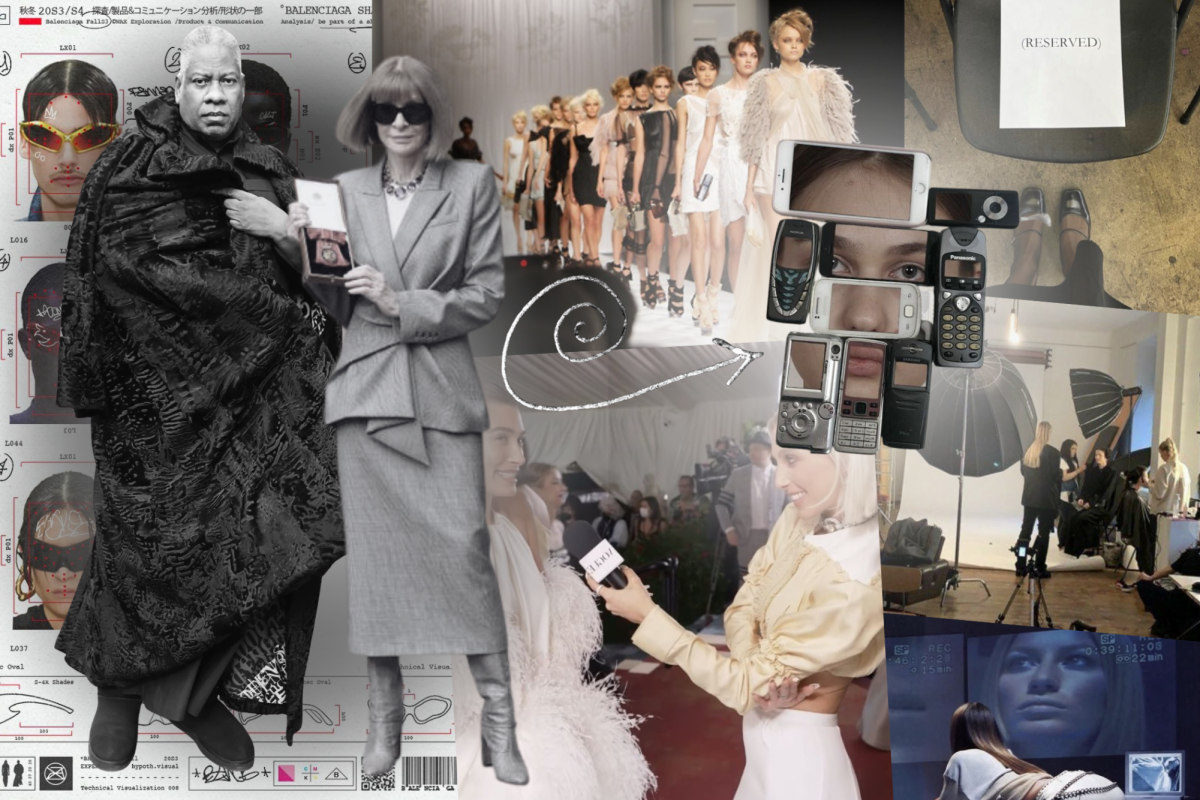
In the 1990s and early 2000s, fashion shows had a strict guest list.
Those invited were well-established individuals in the industry: journalists, press, buyers, and models.
Today, runways and events are oversaturated with social media personalities, many of whom are uneducated.
Yes, we live in a digital age; inviting content creators brings in views.
But that isn’t an excuse for fashion journalists and graduates who’ve been fighting to be seen for the length of their careers to be pushed out.
For example, Podcaster Jake Shane hosted the Vanity Fair Oscar Party on March 15th.
Despite being famed online, Shane’s own fans came out questioning his performance on the red carpet.
He was often at a loss for words, had ill-prepared questions, and was unprofessional – to the point where multiple celebrities were visibly uncomfortable.
This opportunity could’ve been passed on to someone with experience and a proper education in fashion media.
Instead, it was given to Shane, who frankly did more harm than good for the reputation of the event.
Now, interviewers are hired for a different reason, with many of the faces you see chosen based on social media followers or nepotism.
With this, it’s hard not to notice how structure and audience have regressed in fashion over time.
But how did this drastic change happen?
It may feel like the shift happened overnight, but traditional journalism has been declining since the early 2000s.
During the Great Recession in 2009, Americans saw a rise in digital media consumption.
This drove print publications to near extinction, as magazines dropped nearly 50% in revenue.
Social platforms were a resilient competitor to on-the-ground journalism; even today, there isn’t any end in sight.
As the 2000s soon became the 2010s, the internet continued to reach new heights.
In an attempt to keep up with the evolution of news coverage, reporters began to use social media platforms like Facebook, Tumblr, and YouTube.
Today, major publications continue to use this method; now relying on Instagram and TikTok to draw in viewership and monetization.
It goes to show how exclusivity and access have changed in the industry over the years, with 58% of global magazine revenue coming from digital sources.
For example, the earnings of the biggest magazine in the world – Vogue – are no longer from print sales.
Full access to the content on Vogue’s website is priced at merely $1 a month.
A one-year print subscription costs between $18 and $20.
This is a significant decline in cost, as in the publication’s peak a yearly subscription was valued at $19.99, equivalent to about $50 today.
In sum, the cost of Vogue magazine has declined by 60% – all in an attempt to keep up with the oversaturated internet.
If publications continue down this road, journalists will continue to be replaced with self-proclaimed fashion gurus, whose extent of research is what they see on their cellphone.
And fashion journalism itself will be less about art, and self-expression, and more focused on what’s trending online.