





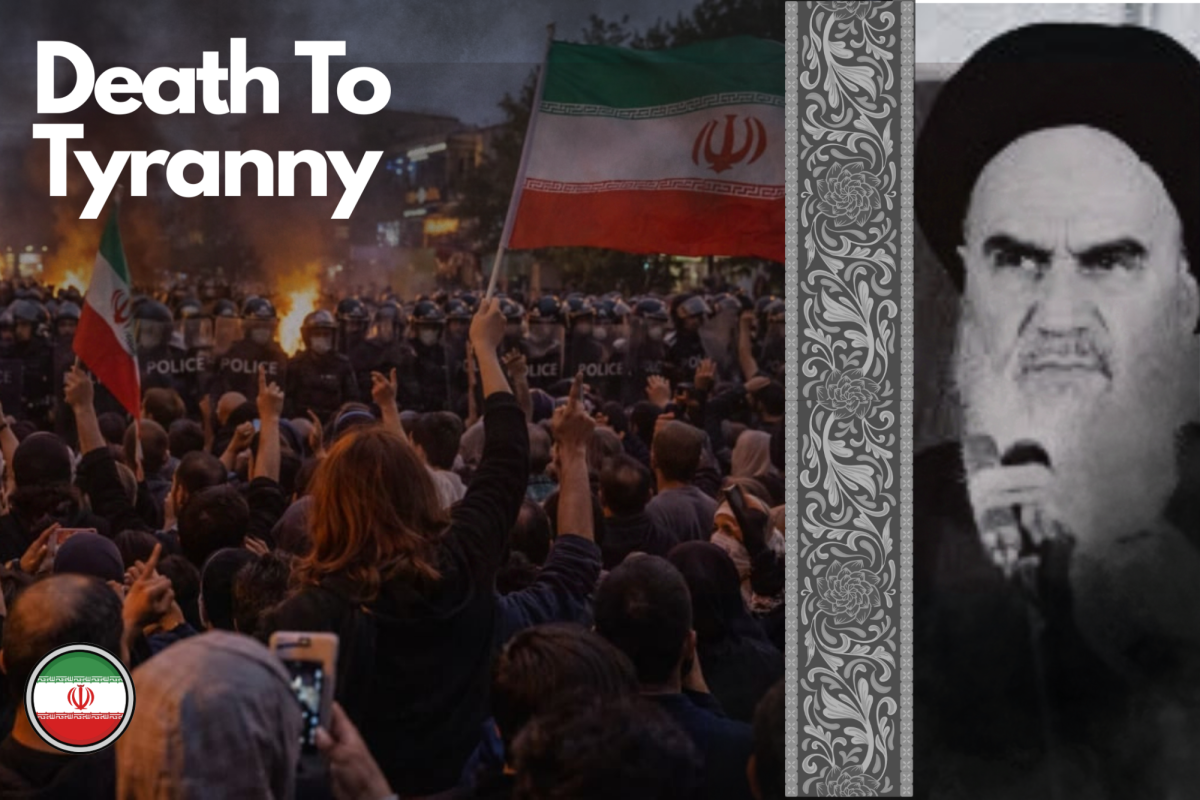











































Tensions rise in Iran as thousands of protestors take to the streets to fight back against the tyrannical regime that has been in power for the last 36 years, according to AP News.
This uprising was sparked by a nationwide economic crisis that drove countless citizens, from the capital city of Tehran and more rural areas, into severe poverty.
According to The New York Times, “The Iranian rial plunged to a record low against the U.S. dollar, unleashing a wave of anger. Within hours, shopkeepers in Tehran’s bazaars—the historic heart of Iran’s economy—organized a strike and took to the streets.”
The rial has historically been one of the least valuable national currencies in the world, due to constant political instability and strict limits on access to global markets.
As a result of this massive uprising, the Iranian government blocked almost all communications from going in and out of the country; however, local news outlets from inside Iran have reported the civilian death toll to be extremely high.
“More than 36,500 Iranians were allegedly killed during a brutal, two-day crackdown against anti-regime protesters,” reported The New York Post.
Iran has had a long history of protests in the past, but these current revolts have recently grown to an unprecedented scale.
According to AP News, activists believe this was the “bloodiest crackdown on dissent since the Islamic Republic was created in 1979. They worry the number [of reported deaths] will increase as information trickles out.”
An anonymous Iranian citizen was able to get in contact with news outlets and retell his firsthand experience of being involved in the protest.
According to CBS News, “He was in a crowd of about 1,500 people marching toward Imam Hossein Square when, he said, government forces started shooting at them from the front and the back in what he thinks was a plan to mow them down from both sides.”
To prevent more citizens from being massacred, the United States has considered intervening in this foreign conflict through military power.
According to BBC News, “The US president said a ‘massive armada’ was ‘moving quickly, with great power, enthusiasm, and purpose’ towards Iran, referring to a large US naval fleet. In response, Iran’s Foreign Minister Abbas Araghchi said the country’s armed forces were ready ‘with their fingers on the trigger’ to ‘immediately and powerfully respond’ to any aggression by land or sea”.
As Trump plans to meet up with Iranian officials in Oman on February 6th to discuss nuclear weapons and diplomacy, according to BBC News, many Americans are worried about the prospect of getting involved in another war in the Middle East.