


























The concept of a celebratory dance and banquet for young people traces back to ancient Greece; “symposias” were held to honor elite men and their transition into adult society. However, the first American proms were held in the late 1870s for college students attending Harvard or Stanford.
According to the Oxford Dictionaries, the word promenade, defined as a leisurely walk or place for walking, is also used to describe movements in ballet and ballroom dancing.
Promenade concerts often included dancing in formal attire during Ivy League events. Prom in the 1950s was a far different experience than it is today from the fashion to the traditions like promposals.
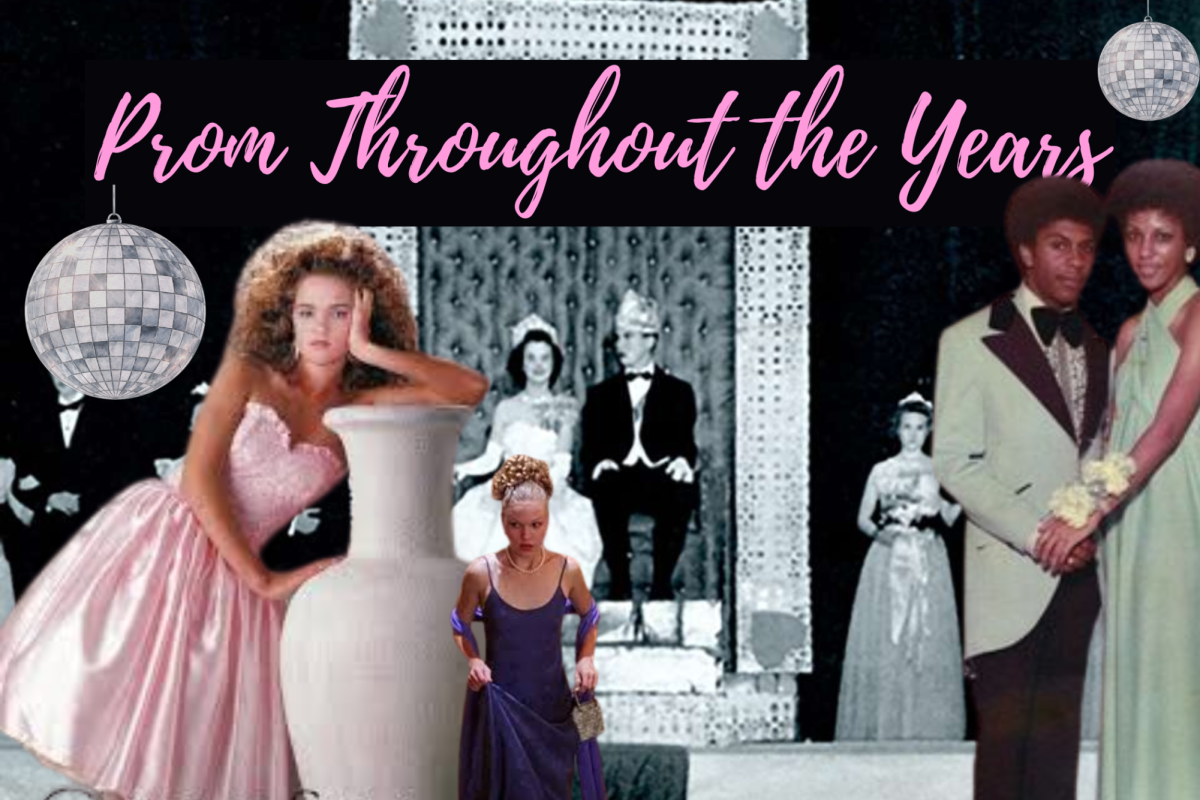
This year’s prom theme is a throwback to the 1970s, which begs the question, what was prom like throughout the years?
When asked what inspired this theme, Junior Class President and head of the Prom Committee Noa Kemp said “[a lot of people requested a rave theme, but with] our venue being Children’s Museum we just knew we weren’t going to be able to execute rave, so we thought making it kind of like a vintage rave would be the easiest way to give everyone what they wanted.”
Fashion-
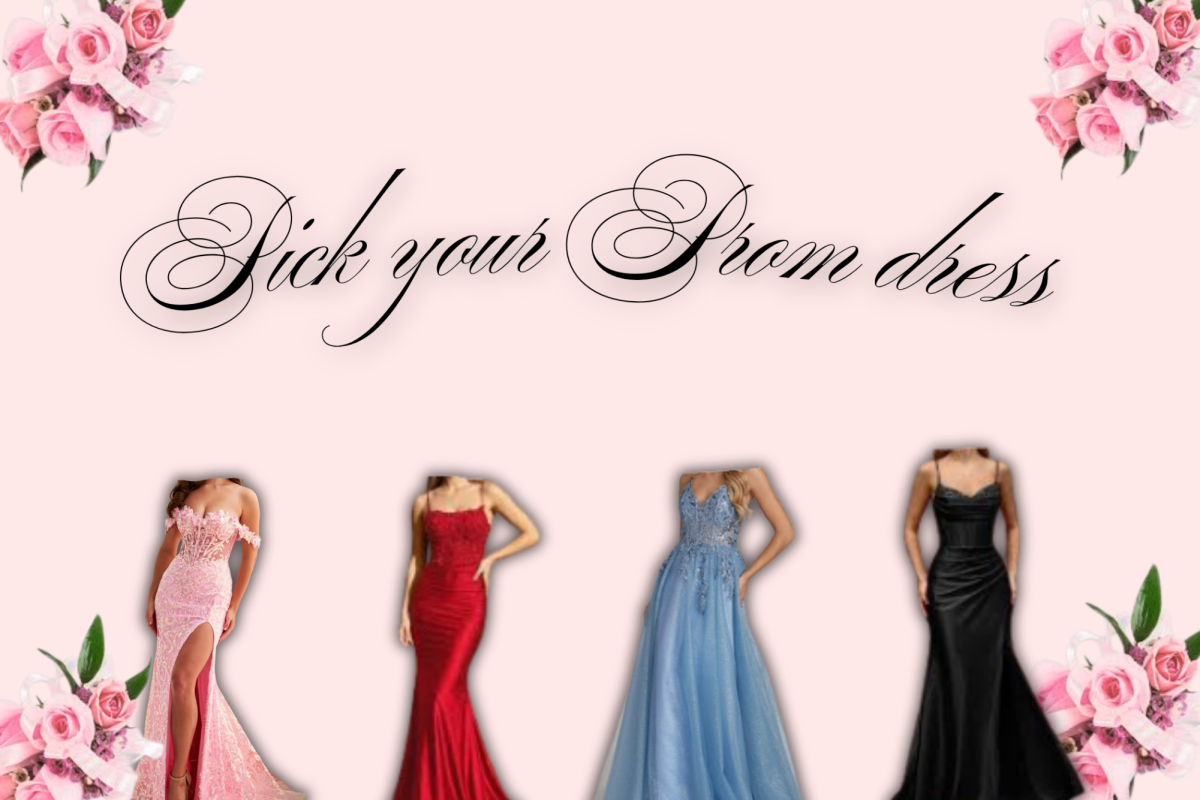
From tulle skirts and big bows to minimalist slim dresses or beaded fabrics, prom fashion has changed a lot throughout the years.
Prom dresses in the early 50s consisted of tea-length dresses with tight bodices and large tulle skirts; appliques, sashes, and even elbow length gloves were all the rage for teen girls.
The early 60s are often dubbed “the transitional era,” where waistlines went up slightly and skirts were slimmed down.
In the mid 60s many girls ditched formal gowns and wore knee-length sheath dresses instead, said Elle Magazine.
The 70s consisted of long dresses with either eyelet lace or small, simple, embellishments. The 80s were LOUD with ruffles, metallic fabric, tulle skirts, and big bows on the front, back, or side of the dress.
The “early ’90s were interchangeable with the late ’80s,” said Elle Magazine.
In the late 90s and early 2000s minimalist strappy dresses were in. This can be seen worn by Julia Stiles in 10 Things I Hate About You, a sleek, strappy dark blue dress worn with a lighter blue shawl.
Additionally, high necklines and bare shoulders were also a trend in the mid 2000s. The late 00s brought back big dresses with tiered tulle skirts and dresses too big to fit through the limo’s door.
The 2010s brought beaded dresses and ruched necklines like the ones on Project Runway.
Elle Magazine said, “when the Project Runway designers were asked to create prom dresses for real teenagers, they created forward-thinking designs that made simple prom dresses fashionable again.”
With sustainability at the forefront of everybody’s mind, vintage dresses made a comeback for prom. The late 2010s made old new again.
Promposals-
What if someone asked you to prom by jumping out of a plane with a sign that read ‘Prom?’ Would you say yes? Promposals are elaborate acts or presentations used to ask someone to prom.
Promposals are a fairly recent invention dating back to 2011 according to Merriam Webster’s Arts & Culture section.
Proms are becoming special again and kids want to put in the effort for their prom dates.
The Merriam Webster Dictionary said “asking someone to prom is almost as old as prom itself, but as the act of asking grows more and more elaborate the phrase ‘asking someone to prom’ is no longer sufficient.”
While elaborate ‘promposals’ are fairly new, they’ve become a pillar of high school traditions.
From ancient symposia to modern high school ballrooms, prom has always reflected the values and creativity of the generation experiencing it. While the dresses, trends, and traditions have shifted, the meaning behind prom remains consistent. It’s still a night centered on celebration, connection, and marking a moment of transition. As styles continue to evolve and new traditions emerge, prom proves that while the details may change, the excitement and significance of the night stay timeless.